How to Check Your Tyre Manufacturing Date
Learn where to find your tyre manufacturing date, decode markings like 2423, and check what tyre age means before buying replacements or taking a long drive.
Published
21 Nov 2026
Updated
21 Nov 2026
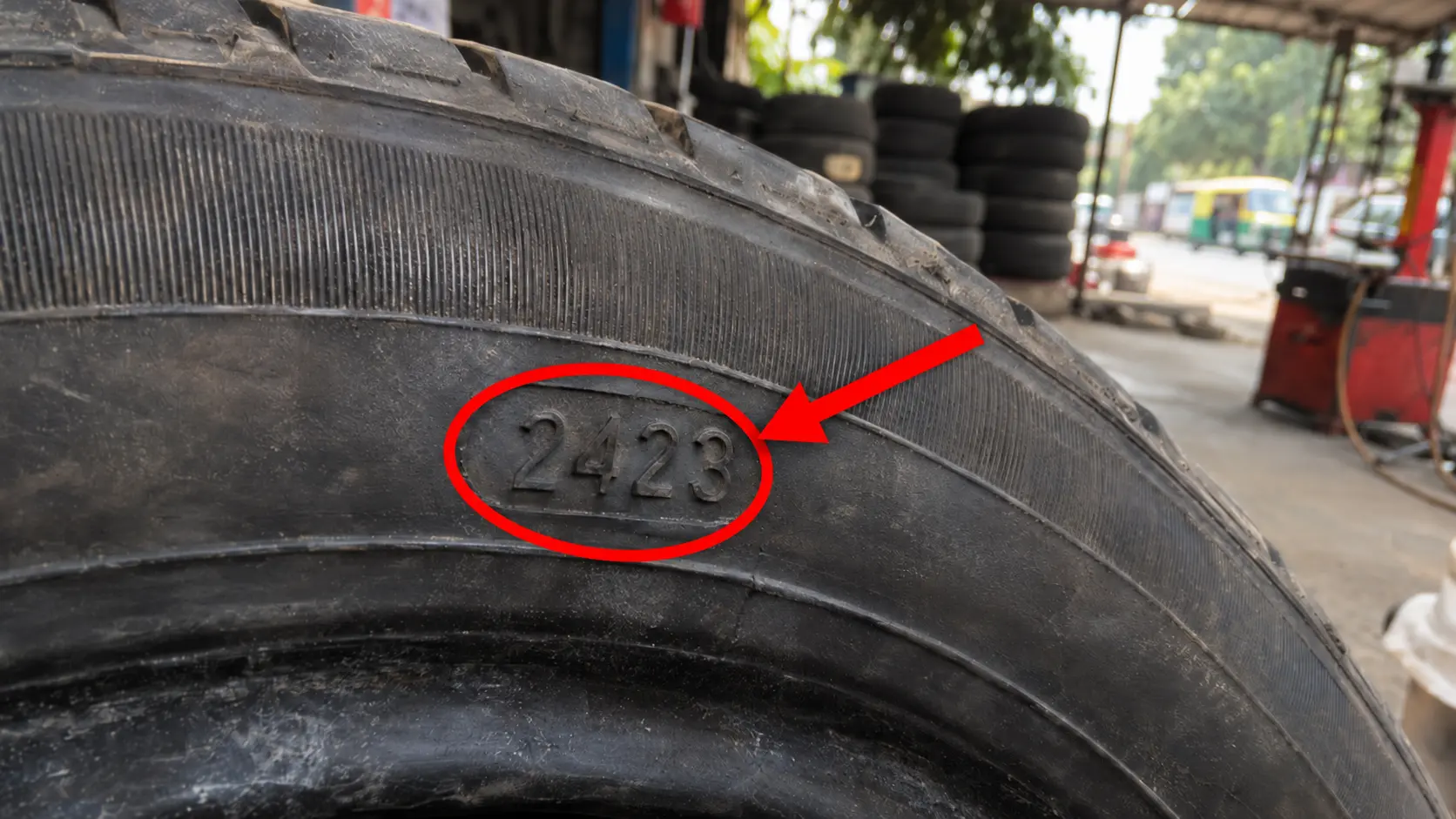
To check a tyre's manufacturing date, find the four-digit date code on its sidewall. The first two digits indicate the week; the last two indicate the year. So 2423 means the tyre was made in week 24 of 2023.
That small marking is useful when you're buying replacement tyres, checking a used car or preparing for a highway trip. It tells you when the tyre was made. Deciding whether it is still fit to drive on takes a separate check of its condition and the manufacturer's guidance.
Where to find the tyre manufacturing date code
Park somewhere safe, away from traffic, and inspect the tyre's sidewall with a torch. Look for the tyre identification marking. On tyres carrying a DOT marking, the manufacturing date is the final four digits of that identification code. Michelin's guide to sidewall markings illustrates how to recognise it.
If you can see DOT followed by letters and numbers but no date, check whether the full marking is on the other sidewall. It may face inward. The NHTSA tyre safety guide notes that the date-bearing identification number may not appear on both sides.
Don't crawl beneath the car to look for it. Ask a tyre shop to show you the marking if you cannot reach or read it safely. If the layout differs from the examples here, use the tyre maker's marking guide rather than assuming any four nearby digits represent a date.
Don't confuse the date with tyre size
A marking such as 205/55 R16 describes the tyre's dimensions and construction. A marking such as 91V gives its load index and speed rating. Neither tells you when the tyre was made.
How to read the four-digit code
Read the code as WWYY, keeping any leading zero.
| Date code | Manufacturing week | Manufacturing year |
|---|---|---|
| 2423 | Week 24 | 2023 |
| 0525 | Week 5 | 2025 |
| 4822 | Week 48 | 2022 |
The code does not give an exact day or use a day/month format. 2423 does not mean 24 February, and the first pair of digits is not the year.
For example, a tyre marked 2423 was made around June 2023. In November 2026, it would be about three years and five months old. That calculation establishes its age; it cannot establish its condition.
Manufacturing date, fitting date and expiry date are different
The manufacturing date is moulded into the tyre. The fitting date is when it went onto the car, which you should record on the invoice or in your service history. Tyres may spend time in stock between those dates.
Suppose a tyre was manufactured in 2023 and fitted in 2024. By the same point in 2026, it has roughly three years of calendar age and two years of use. Keep both dates: a recommendation measured from manufacture has a different starting point from one measured from first use.
The four-digit code is not an expiry date. It also does not tell you how a tyre was stored, whether it was driven under-inflated or whether it suffered an impact. Deep-looking tread alone cannot answer those questions either.
When does tyre age mean it's time to replace it?
Start with the guidance for your tyre and vehicle. Avoid treating “five years” or “ten years” as a universal service life.
For example, Michelin recommends:
- After five years of use: have the tyres professionally inspected at least once a year.
- At ten years from manufacture: replace them as a precaution, even if they appear usable. This includes spare tyres.
These are Michelin's recommendations, not an India-wide expiry rule. They do not promise that a tyre will last ten years. Wear, damage or your vehicle manufacturer's instructions may require earlier replacement.
What to check alongside age
Include these checks in your regular maintenance and before a long drive:
| Check | What to do |
|---|---|
| Tread wear | Check the tread-wear indicators and ask a professional to measure remaining depth if uncertain. |
| Bulges, cuts or exposed cords | Stop using the affected tyre and arrange professional assistance. A recent date code does not make damage safe. |
| Pressure | Check cold tyres against the vehicle's door-jamb placard or manual. The sidewall's maximum pressure is not your car's recommended setting. |
| Uneven wear, repeated air loss or new vibration | Arrange an inspection of the tyre and the underlying cause. |
| Spare tyre | Check its date, condition and specified pressure, even if it has never been fitted. |
The NHTSA maintenance guidance explains why pressure, wear, damage and ageing need attention together.
Check the date before buying replacement tyres
Ask the fitter to show you the date code on each tyre before installation. Photograph it while both sidewalls are easy to access. This gives you a useful record and a chance to resolve questions before fitting.
If a tyre has spent time in stock, ask how it was stored and what the manufacturer says about its age and suitability. Also confirm the warranty terms and keep the purchase invoice. The manufacturing code alone cannot establish storage quality or when warranty coverage begins.
There is no need to invent a rule that every acceptable tyre must have been made within the last three or six months. Equally, “unused” should not end the discussion about older stock. If the seller cannot explain the date or provide clear product information, resolve that before buying.
For a new car, record the tyre dates during your delivery inspection. Check each tyre individually rather than assuming all four and the spare share a manufacturing date.
Keep a record you can use at the next service
Save a clear photograph of each date code, its fitting date and the invoice. Label photos by wheel position and update your notes after rotations or replacements so you can still identify each tyre.
Take that record to your next tyre inspection, especially before a longer journey. Reading the code takes a moment; pairing it with a condition check makes the information useful.
Need a privacy-first contact sticker for your car?
Order the QrMyCar QR sticker to stay reachable in any parking issue without revealing your phone number.
FAQ
What does 2423 mean on a car tyre?
The tyre was made in week 24 of 2023. The first two digits show the manufacturing week and the final two show the year.
Is the tyre date code an expiry date?
No. It is a manufacturing date, not a guarantee of how many years the tyre will remain safe. Age, condition, storage, usage and the maker's guidance all matter.
Should I replace a tyre just because it is five years old?
Not automatically. Michelin, for example, recommends a professional inspection at least annually after five years of use and precautionary replacement at ten years from manufacture. Follow your tyre and vehicle manufacturers' guidance; wear or damage can require replacement much earlier.
Why can I see DOT but no four-digit date code?
The complete identification marking may be on the other sidewall, facing inward. Ask a tyre shop to locate it if you cannot read it safely.
Should all four tyres have the same manufacturing date?
Matching date codes are not a substitute for checking each tyre. Record each date separately, and have the fitter confirm that the tyres meet your vehicle manufacturer's requirements for size, specification and matching.
Does the spare tyre age even if I never use it?
Yes. Include the spare when checking manufacturing dates and follow the manufacturer's inspection and replacement guidance even if its tread looks unused.