Society Parking Management Without a Boom Barrier
Manage society parking and vehicle entry without expensive boom barriers. Learn how QR parking stickers help housing societies improve security, track visitors, and simplify vehicle identification.
Published
22 Jun 2026
Updated
22 Jun 2026
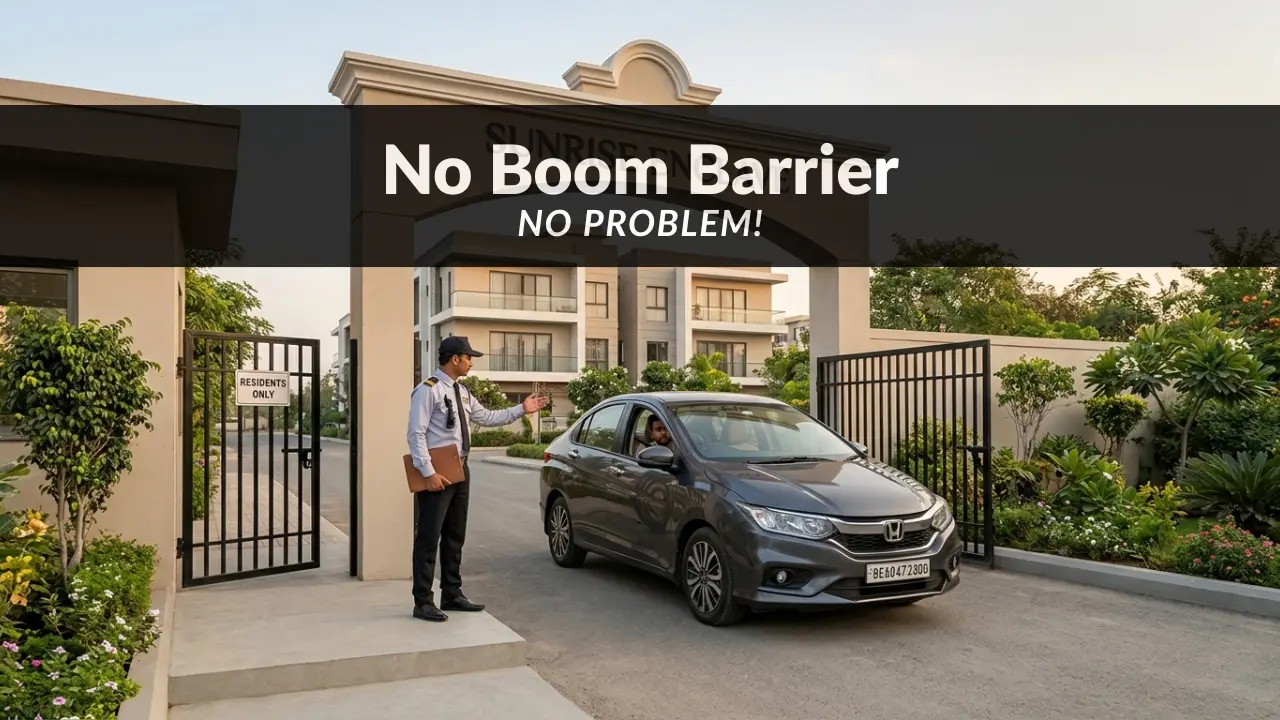
Managing parking and gate access in a gated society without a boom barrier can be challenging. QR-based parking stickers provide a simple, affordable, and effective solution that helps security guards identify authorized vehicles, manage visitor entries, track vehicle access, and improve overall safety without investing in expensive infrastructure.
Why Parking Management Is a Challenge Without a Boom Barrier
Many residential societies have security guards at the entrance but do not have automated boom barriers or access control systems.
In such societies, guards often rely on visual verification, memory, or manual registers to determine whether a vehicle belongs to a resident. As the number of residents grows, this process becomes difficult, time-consuming, and prone to errors.
Some common challenges include:
- Unauthorized vehicles entering the premises
- Difficulty identifying resident vehicles
- Manual visitor entry registers
- Lack of vehicle entry records
- Parking disputes between residents
- Security guards struggling during shift changes
Without a proper system, maintaining security and accountability becomes increasingly difficult.
Common Security Risks in Housing Societies
| Security Risk | Description |
|---|---|
| Unauthorized Vehicle Entry | Security personnel may not recognize every resident's vehicle. This can allow unknown vehicles to enter without proper verification. |
| Missing Visitor Records | Paper registers are often incomplete, difficult to search, and prone to human error. |
| Parking Misuse | Visitors or outsiders may occupy resident parking spaces without authorization. |
| Delayed Emergency Response | When a vehicle blocks another vehicle or causes an issue, identifying and contacting the owner can take significant time. |
What Are QR-Based Society Parking Stickers?
QR-based society parking stickers are customized vehicle stickers that contain:
- Society name
- Society logo
- Secure QR code linked to the vehicle owner
- Emergency contact functionality
Each vehicle receives a unique QR sticker that can be easily verified by security personnel using a smartphone.
The sticker acts as a digital identity card for the vehicle.
How QR Parking Stickers Work
Implementing a QR parking sticker system is simple and does not require any expensive hardware or infrastructure changes.
Step 1: Society Orders Customized QR Stickers
The society management committee or RWA partners with a QR parking sticker provider such as QrMyCar.
The society shares its name, logo, and branding requirements. Customized QR parking stickers are then printed and delivered to the society.
Step 2: Society Registers Residents and Vehicles
Using the admin portal, society administrators can add resident details and register their vehicles.
Many societies also choose to verify vehicle ownership documents, such as the Registration Certificate (RC), before assigning a sticker to ensure that only genuine resident vehicles receive access.
Step 3: QR Stickers Are Assigned to Vehicles
Each sticker contains a unique QR code linked to a specific resident and vehicle.
Once assigned, residents place the sticker on their vehicle, making it easy for security personnel to identify authorized vehicles entering the premises.
Step 4: Security Identifies Authorized Vehicles
Security guards can quickly recognize vehicles carrying valid society-issued QR stickers and allow entry without relying on memory or manual records.
If a vehicle is parked incorrectly, blocking another vehicle, or creating a parking issue, the QR sticker can also help security personnel or residents contact the vehicle owner quickly.
Step 5: Residents Create Visitor Passes
Residents can generate digital visitor passes for family members, guests, domestic staff, delivery personnel, service providers, cab drivers.
Each visitor receives a unique QR code that serves as their entry pass.
How QR passes help:
- Faster entry process
- Reduced paperwork
- Accurate visitor records
- Better security oversight
- Easy reporting for society management committees
Step 6: Security Scans Visitor QR Codes
When a visitor arrives, the security guard scans the visitor QR code and grants entry.
The entry is automatically recorded in the system, creating a digital log that society administrators can monitor through the dashboard.
This creates a secure, trackable, and organized vehicle access system without the need for a boom barrier.
Benefits of QR Parking Stickers for Housing Societies
Better Security
Only vehicles with valid society-issued QR stickers are allowed regular access, reducing the risk of unauthorized entries.
No Need for Expensive Boom Barriers
Societies can implement a professional vehicle access system without investing lakhs of rupees in hardware, installation, and maintenance.
Faster Vehicle Identification
Security guards can quickly identify resident vehicles without relying on memory or paper records.
Digital Visitor Tracking
Every visitor entry can be recorded digitally, making audits and investigations easier when required.
Reduced Parking Disputes
Vehicle ownership can be verified quickly, helping resolve parking-related issues efficiently.
Professional Society Branding
Customized stickers featuring the society name and logo create a professional and organized appearance.
Easy Vehicle Owner Contact
In case of:
- Incorrect parking
- Blocked vehicles
- Emergency situations
Security personnel or residents can contact the vehicle owner through the QR code without publicly displaying personal phone numbers.
How QrMyCar Helps Societies Improve Security
QrMyCar provides a complete QR-based parking and visitor management solution designed specifically for residential societies.
Key features include:
- Customized society-branded parking stickers
- Unique QR code for every vehicle
- Resident vehicle identification
- Visitor pass generation
- Digital visitor logs
- Vehicle owner contact system
- Admin dashboard for monitoring entries
- Easy implementation without boom barriers
This allows societies to improve security while keeping operational costs low.
Key Takeaways
TL;DR
- QR parking stickers help security guards quickly identify authorized resident vehicles without requiring expensive boom barriers.
- Visitor QR passes create a secure and trackable entry process for guests, delivery personnel, and service providers.
- QrMyCar combines parking management, visitor tracking, and vehicle owner communication into one simple solution for housing societies.
Looking for QR stickers for your society?
See how QrMyCar helps societies and management committees control vehicle access, reduce manual work, and improve security across all gates.
FAQ
What is a QR-based parking sticker?
A QR-based parking sticker is a customized vehicle sticker containing a unique QR code linked to a resident's vehicle information. It helps security personnel identify authorized vehicles and improve access control.
How do QR parking stickers improve society security?
They allow security guards to quickly distinguish resident vehicles from unauthorized vehicles, maintain better records, and ensure that only approved visitors enter the premises.
Why choose QR parking stickers instead of a boom barrier?
Boom barriers require significant investment, installation, maintenance, and infrastructure. QR parking stickers provide a cost-effective alternative that improves security without expensive hardware.
How can visitors enter the society using QR codes?
Residents can generate visitor QR passes for guests, relatives, delivery agents, domestic staff, or service providers. Security personnel scan the pass and record the entry digitally.
Can security personnel contact vehicle owners using the QR sticker?
Yes. In situations such as blocked parking, incorrect parking, or emergencies, authorized users can contact the vehicle owner through the QR system without revealing personal contact details publicly.